Juice shop online ordering has one constraint that pizza and biryani do not: the product is best within twenty minutes of being made. That rules out most of what food delivery apps are built for, and it is why many juice bars give up on online orders after a few bad reviews about separated, warm smoothies.
The fix is to design the ordering around freshness. Pre-orders for pickup, a short delivery radius, batch windows for offices and gyms, and a weekly pack that regulars reorder with one tap. This guide shows how to set that up and how to market it, using the juice bar's natural advantage: customers who buy every single day.
Why juice bars suit online ordering more than they think
Juice is a habit purchase. The same person wants the same sugarcane juice at 8:15 am on the way to work, or the same post-workout smoothie at 7 pm. Restaurants fight for a customer who orders twice a month; a juice bar can have customers who order twenty times a month. A channel that makes reordering effortless is worth more here than anywhere else in food.
The ticket is small, ₹60 to ₹180 for a single juice, which is exactly why commission channels hurt. On a ₹120 cold-pressed juice, a 25 percent commission is ₹30, and after a cup, a lid and a straw there is very little left. Direct orders on your own number carry no commission, and a flat per-order fee on a ₹120 order is a cost you can plan around.
There is also the office cluster. Three or four people in one office ordering together at 11 am is a single delivery of ₹500 and a repeat every weekday. That pattern is almost impossible on an app and easy on WhatsApp.
Solve the freshness problem first
Three rules keep online juice orders drinkable. Make to order, never from stock. Keep delivery to a radius you can serve in 15 to 20 minutes, which in most cities is 2 to 3 km. Push everything further than that to pickup or to scheduled batch windows.
Containers matter. A sealed PET bottle with a tamper band travels far better than a cup with a lid, holds in a delivery bag without spilling, and lets a customer drink an hour later from the fridge. Price the bottle size slightly higher and most customers choose it for delivery. For smoothies with fruit pulp, note on the menu that separation is normal and a shake fixes it.
Time slots turn freshness from a problem into a selling point. A 7:30 to 8:30 am slot for morning regulars and a 6 to 7 pm slot for the gym crowd, both made in a batch and dispatched at once, keep the product fresh and the kitchen calm. The same structure is described for other formats in self-pickup orders and takeaway pre-orders.
Build a menu customers can reorder in two taps
A juice menu should be short, with variations as options rather than separate items. Each juice has sizes, typically 300 ml and 500 ml, as variants. Add-ons such as protein, chia seeds, ginger shots or no added sugar sit on top at ₹20 to ₹60 each. Twenty base items with two sizes and five add-ons cover almost any juice bar without a 90-item list that nobody scrolls.
Packs are where the margin grows. A five-day morning juice pack at ₹550 instead of ₹600 is a bundle that a customer buys once a week. A three-day detox plan with a fixed sequence is a bundle with a schedule. A build-your-own pack, where the customer picks five juices for a fixed price, lets regulars rotate flavours without you creating a new item for every combination.
Seasonal menus matter more in juice than in most categories. Sugarcane, mango and watermelon in summer, carrot, beetroot and amla in winter. Menu scheduling by weekday and time lets the breakfast menu show in the morning and the smoothie bowl menu in the afternoon, and lets you take an item off automatically when the season ends.
Pickup, pre-orders and the office batch
Pickup is the highest-margin order a juice bar can take: no delivery cost, no melting, no commission, and the customer walks past the counter where an extra protein ball is waiting. Let customers order ahead on WhatsApp and choose a collection time, so the juice is poured two minutes before they arrive rather than ten minutes after.
Office pre-orders work as a scheduled order with a cut-off. Orders placed by 10:30 am are made together and delivered at 11:15 to the office reception. One rider, one trip, eight juices. Tell nearby offices about it with a printed card at reception and a WhatsApp message to the admin.
Gyms are the evening version. A deal with the gym at the corner for a members' price, a QR code at the front desk that opens your WhatsApp ordering chat, and a 6:30 pm pickup batch that members collect on the way out.
Delivery zones, minimums and charges
Keep the delivery zone small and honest. A 0 to 2 km zone with a ₹20 delivery charge, free above ₹250, and a 2 to 3 km zone at ₹35, free above ₹350. Beyond 3 km, pickup only. A minimum order of ₹150 for delivery stops a single ₹70 juice from costing you ₹30 in rider time.
The free-delivery threshold does quiet work. A customer with a ₹200 cart adds a ₹60 shot to cross ₹250, and the extra ₹60 covers the delivery and a bit more. The guide to setting a free delivery threshold walks through the numbers.
Juice shop marketing that fills the mornings
Juice shop marketing is about rhythm, not reach. A WhatsApp Status at 7 am with today's fresh fruit. A Tuesday broadcast announcing the week's seasonal special. A loyalty mechanic tracked on the customer's number, every tenth juice free. A win-back message to anyone who has not ordered in three weeks. Each of these takes minutes and reaches people who already buy from you.
The weekly pack is the marketing that sells itself. Every Sunday evening, a message to pack customers: "Your Monday pack is ready to reorder. Tap to confirm." Reorder rates on a habit product respond well to a reminder sent at the moment the decision is made. The mechanics of sending to a list, including consent and timing, are in WhatsApp broadcast for restaurants.
Instagram brings the new customers. Pour shots, the colour of beetroot and orange, the morning queue. Every post links to the WhatsApp ordering chat, and the first order comes with a coupon for the second.
Which channel to use for which order
| Channel | Good for | Cost per order | Freshness control |
|---|---|---|---|
| Walk-in counter | Passing trade, impulse buys | None | Full |
| Food delivery apps | Discovery by new customers | Commission commonly 18 to 30 percent of order value | Low; rider timing is not yours |
| Own WhatsApp number plus store page | Daily regulars, office batches, weekly packs, pickup | Subscription plus a flat per-order fee | Full; you set slots and radius |
Most juice bars end up with the apps for the first order and their own number for every order after that, which is the same split that works for an ice cream parlour or a cafe. The home food business pillar on ideas that work on WhatsApp has more small-ticket formats that follow the same logic.
What this looks like on Tezzu
On Tezzu, your juice bar runs an ordering bot on your own WhatsApp number plus a free store page at tezzu.in/store/your-shop. Each juice carries 300 ml and 500 ml variants and add-ons such as protein or ginger shots. Weekly packs and detox plans are bundles, including build-your-own bundles where the customer picks the juices. Menu scheduling by weekday and time switches the morning menu to the afternoon one automatically and retires seasonal items on a date.
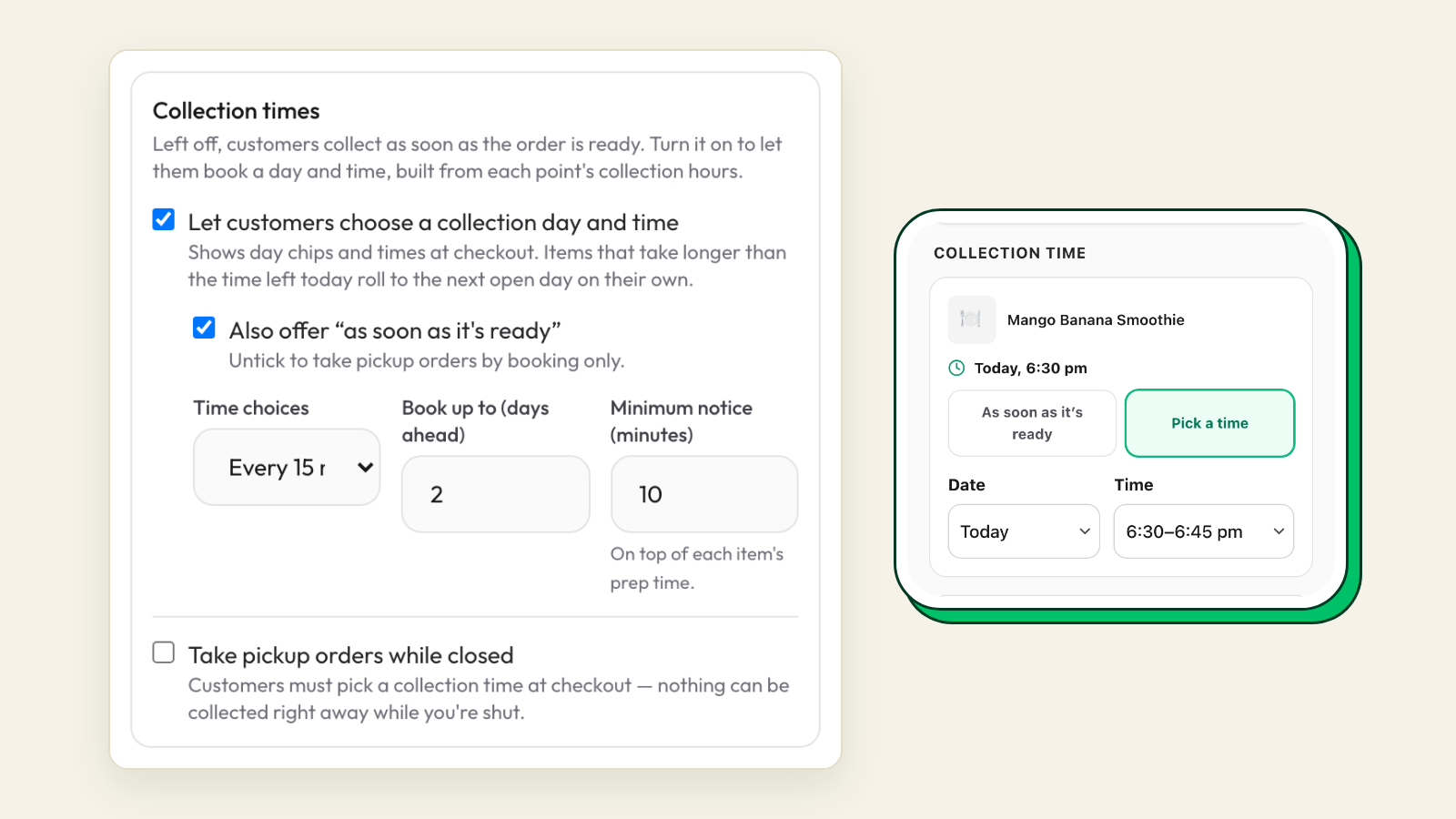
Self-pickup points with a collection time handle the counter regulars, and scheduled orders handle the office batch with a cut-off. Delivery zones carry distance-based charges and a per-zone free-delivery threshold, so the 2 km and 3 km zones work exactly as described above. Payments run on UPI and cards through Razorpay, with cash on delivery as an option, and coupons can auto-apply for a first order. WhatsApp campaigns with a prepaid wallet send the Sunday pack reminder and the Tuesday special, and reviews are collected after delivery. Orders land in a live dashboard and on the staff app with new-order alerts, so the person at the blender hears each order without looking at a screen. Plans start at ₹999 a month with a flat ₹10 per order and no commission.
See how small food businesses run on their own number
Variants, weekly packs, pickup slots and short delivery zones, with no commission on any order.
See how it works for small food businessesFrequently asked questions
Can a juice bar deliver without the juice going bad?
Yes, with three rules: make to order, deliver within 2 to 3 km so the juice arrives within 15 to 20 minutes, and use sealed bottles rather than cups. Push longer distances to pickup or scheduled batch slots. Cold-pressed juice in a sealed bottle holds in a fridge for a day, which makes morning packs practical.
How do I take juice orders on WhatsApp?
Set up an ordering bot on your business number that shows the menu with sizes and add-ons, takes the pickup time or address, and collects UPI payment. Regulars reorder their usual in a couple of taps, offices place a batch order before a cut-off, and every order lands in one dashboard instead of a scrolling chat.
Is a juice bar business profitable in India?
Margins on fresh juice are healthy because ingredient cost is low relative to price, but the ticket is small, so profit depends on volume, repeat customers and keeping commission off everyday orders. Weekly packs, office batches and pickup pre-orders lift volume without adding rider cost, and a short delivery radius keeps each delivery cheap.
What minimum order should a juice shop set for delivery?
Around ₹150 for delivery is common, with a small delivery charge below a free-delivery threshold of ₹250 to ₹350 depending on distance. This stops a single ₹70 juice from costing more in rider time than it earns, and nudges customers to add a second item or a shot to reach free delivery.